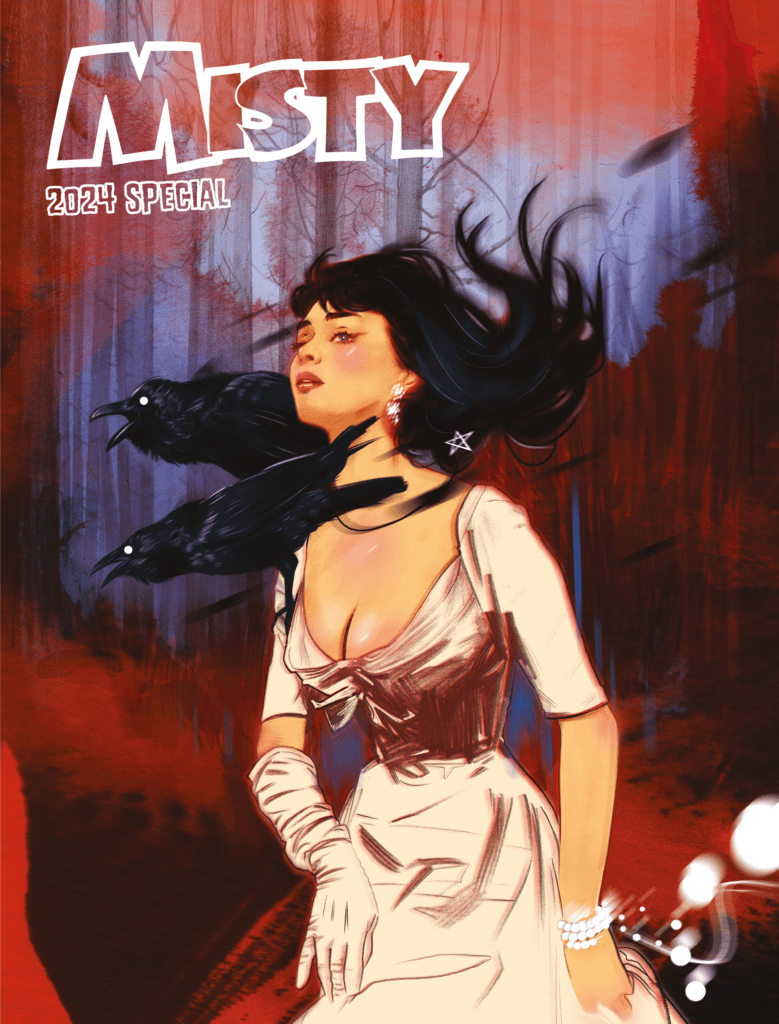
Ghostly possessions, horrific transformations, alien abductions, mysterious cults, dramatic kidnappings, attempted murders, and malevolent traps… Misty had it all. IPC’s ‘All new mystery comic for girls’ burst onto the scene in 1978 and, despite a relatively short run of only 101 issues, is still fondly – and fearfully – remembered today. The story of its creation, demise, and current revival is a winding one through an often neglected period and forgotten demographic of British comics.
Comics for girls had been popular in Britain since after the Second World War, when Amalgamated Press (later renamed as Fleetway and then IPC) revived their textstory paper School Friend as a picture-story comic (1950-65). School Friend and other early titles told rousing stories of adventure and friendship, often within school settings or following career girl protagonists. A ‘second wave’ of girls’ comics appeared in 1958 when DC Thomson launched Bunty (1958-2001): distinct from its sisters with a cheap and cheerful look, outsider protagonists, and appeal to a more working class audience. Bunty was an exceptional comic that would run for over 40 years. It was followed by many imitators and competitors in the
late 1950s and 1960s (Judy, Diana, Mandy, Sally), alongside a new wave of romance comics (Marilyn, Valentine, Romeo, Jackie). The back-and-forth between the publishers continued into the 1970s when IPC took the girls’ titles to the next level with Tammy (1971-84) and Jinty
(1974-81). This ‘dark wave’ of girls’ comics saw some of the most memorable stories of the genre, from writers such as Pat Mills, John Wagner and Gerry Finley-Day, and artists like Mario Capaldi and John Armstrong alongside a wealth of Spanish talent.
In 1976 DC Thomson published Spellbound, packed full of witches, mummies, ghosts and mysteries, alongside lead science fiction feature ‘Supercats’, revived from the pages of Diana (1963-76). Although popular, Spellbound folded after 69 issues, ending just weeks before IPC launched Misty on 4 February 1978. Work on this comic had begun in 1977 when writer Pat Mills, fresh from success with Tammy, Jinty, Battle, Action and 2000AD, met with execs to pitch his idea for a new girls’ comic: ‘big visuals and longer, more sophisticated stories with the emphasis on the supernatural and horror.’
The idea was approved but Mills wanted a cut of the profits and refused an editorial role when this was rejected. So the comic was passed to editor Wilf Prigmore, who was told ‘we want a mystery paper.’
Misty’s two creators got together with writers Malcolm Shaw and Bill Harrington to put together some stories and outlines for the new comic. Mills says ‘I wanted Misty to be much scarier’ but this was toned down. Both creators have claimed credit for the comic’s title, which
was inspired by the film Play Misty for Me. Harrington suggested a (male) host – ‘Nathan somebody’ – as characters like these were popular in girls’ comics, but this was rejected, and Wilf Prigmore devised the character of Misty, our cover girl and host. Artist Shirley Bellwood
was commissioned to bring her to life, and famously based Misty on her own image, providing a series of sketches and paintings that would be used throughout the weekly comics and later annuals. A beautiful, witch-like character, Misty welcomed readers to each issue and acted as a kind of spirit guide, providing reassurance and signing herself ‘Your friend’. Jack Cunningham hand-lettered these welcomes and devised the bat and moon logo for the comic’s cover.
An editorial team was put together with Malcolm Shaw as editor, Bill Harrington as sub-editor, Jack Cunningham as art editor, and Ted Andrews as art assistant. They filled Misty to the brim with a mix of serial stories and one-off tales of the uncanny and supernatural, complemented by a few comedy offerings such as Joe Collins’ ‘Miss T’ and Mike Brown’s ‘Wendy the Witch’
(reprinted from Sandie). Many of the serials were loosely inspired by contemporary horrors such as Carrie, Audrey Rose, Death Line, It Happened Here and The Sentinel, which became ‘Moonchild’, ‘Hush, Hush, Sweet Rachel’, ‘End of the Line’ and ‘The Sentinels’. They often
revolved around a heroine struggling to accept some aspect of herself (telekinetic powers, unwanted possession) or dealing with the discovery of a dangerous magical item or place (secret underground lairs, a parallel universe). Misty’s single stories were perhaps even more
memorable: terrifying cautionary tales where wayward protagonists met horrifying ends, often with a heavy dose of poetic justice. For example, clothes-thief Ann is turned into a fashion dummy. mugger Cath causes an old lady to be hit by a bus but is then run over herself (‘Dead
End’, #34); Sue steals a creepy mask to win a Halloween competition but cannot remove it (‘Mask of Fear’) – these and many more sins are met with an ironic fate (see juliaround.com/misty for a searchable database of stories and creators).
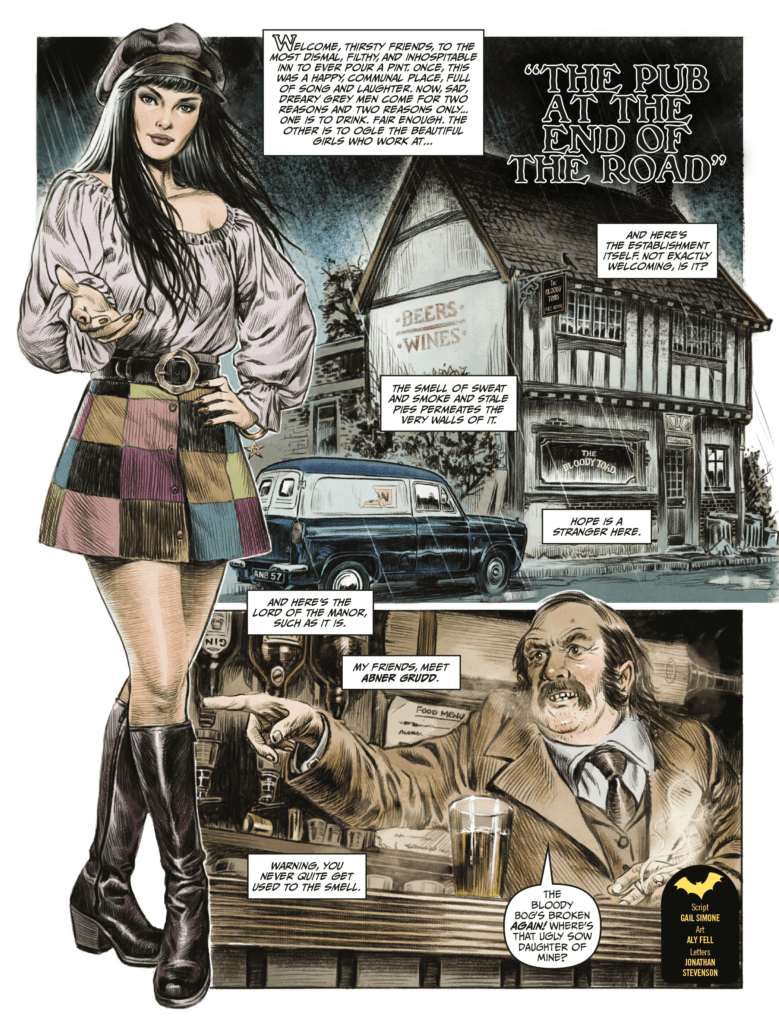
These terrifying events were depicted in dynamic and dramatic art.
Each story or installment in Misty was 4 pages rather than the usual 3, allowing for large panels and varied layouts to create drama and pacing.
Art came from British and Spanish artists such as Mario Capaldi, Brian Delaney, Jaime ‘Homero’ Rumeu, Eduardo Feito, and María Barrera. Some were also drawing horror comics for American publishers Warren at the same time, and they did not tone down their style much.
Reflecting on his work today, artist Isidre Monés exclaims ‘It is horrifying! How can you make those cartoons for girls!’ Their detailed and emotive drawing was enhanced by the Misty editorial team: Jack Cunningham remembers how when the pages came in he would ‘break it all up, bit by bit [… ] I designed what the opening page and the end page should look like, and then here and there indicate where it would be better to leave a frame open’.
Misty was wildly popular and received vast numbers of letters from fans every week. Regardless, after 101 issues the title merged with Tammy and its identity was quickly lost. Reprints and annuals continued into the 1980s and fan sites picked up the reins in the early 2000s, culminating in the release of two ‘Best of’ collections from Egmont, followed by further
reprints when Rebellion purchased the rights. Since 2016 Rebellion have released Misty collections and the new Misty title which you can read more about here
Copyright Misty (TM) REBELLION PUBLISHING LTD, COPYRIGHT © REBELLION PUBLISHING LTD,ALL RIGHTS RESERVED.
Author: Julia Round. This article first appeared in ComicScene Vol 1 Issue 1
Read an article with Misty artist Aly Fell in the latest issue of ComicScene here
ROXY ON KICKSTARTER
The summer of love starts now! Rebellion is delighted to announce the Kickstarter launch of its brand new romance comic, Roxy!
Available to back from today and featuring a host of exclusive rewards, merch, and surprises for backers, Roxy is guaranteed to leave you gasping for air.
Backers can take their pick from digital, paperback or hardback editions, with covers from superstar artists Tula Lotay, Hannah Templer and Marguerite Sauvage, Roxy will feature four unexpected and dynamic stories of fun and flirty love and lust from some of the best storytellers in comics today:
- a brand new supermodel heist thriller from Dracula, Motherf**ker power couple Alex de Campi and Erica Henderson
- a spirited walk in the undead woods from artist writer Sarah Gordon (Vicious Creatures)
- a trip back in time to the regency era from GLAAD & Eisner-nominated writer Magdalene Visaggio and Sterric (De Vloek van Rood);
- a futuristic romance between soldier and mech courtesy of Nadia Shammas (Squire, Ms. Marvel) and Jaws Stone (Dames Zine: Magical Knights)
Shipping for fans old and new worldwide. Whatever your level of spice, Roxy has something for you as it revives the spirit of classic British romance comics for the 21st century.
Originally launched in 1958, the original Roxy ran for 288 weekly issues which caught the imagination of young readers across Britain. Now, the title returns for an all-new anthology featuring four modern romance stories bound to inspire a whole new generation.
Roxy will run on Kickstarter from 16th July until the 8th August – don’t miss out on your chance to take home the hottest comic of the Summer!

 ComicScene magazine
Leave a comment