
Comics have a rich and varied history which should be celebrated. Whereas comics brought radio, TV and film stars to life in living rooms across the country in the mid to late 20th century we now see comics be a creative force itself, influencing TV and popular culture. The U.K. and Ireland has produced stories set in many different genres and explores the diversity of our society, similar to comics in Europe, but (wealthy?) publishers were slow to capitalise on the comic form ‘growing up’ in the early 80’s and did not embrace visual media in the same way as US and Manga comics did in the early 21st century. You can now see comics accepted in schools, libraries (not just TinTin and Asterix) and bookshops. We now create original graphic novels rather than newsagent anthologies. There is a vibrant scene of comic creators who publish and own their own material, with some breaking into the mainstream and benefiting from their success. You can study comics at Uni and can even read and create them in art schools, who for years looked down on the art form as populist, infantile and childish. Manga has exploded, its connection with COVID and TV adaptations on streaming services introducing a new generation to work produced years ago and mass produced in affordable black and white books, easy to pick up and join the story. But at what cost to the creators behind them? There is a whole host of untapped comic material to be translated from all over the world and from the U.K. to other countries too. But who are the decision makers, what formed their view, how do creators benefit, are the sales actually there and can we fund an art form at the same level as opera, ballet and what is the objective of that funding?
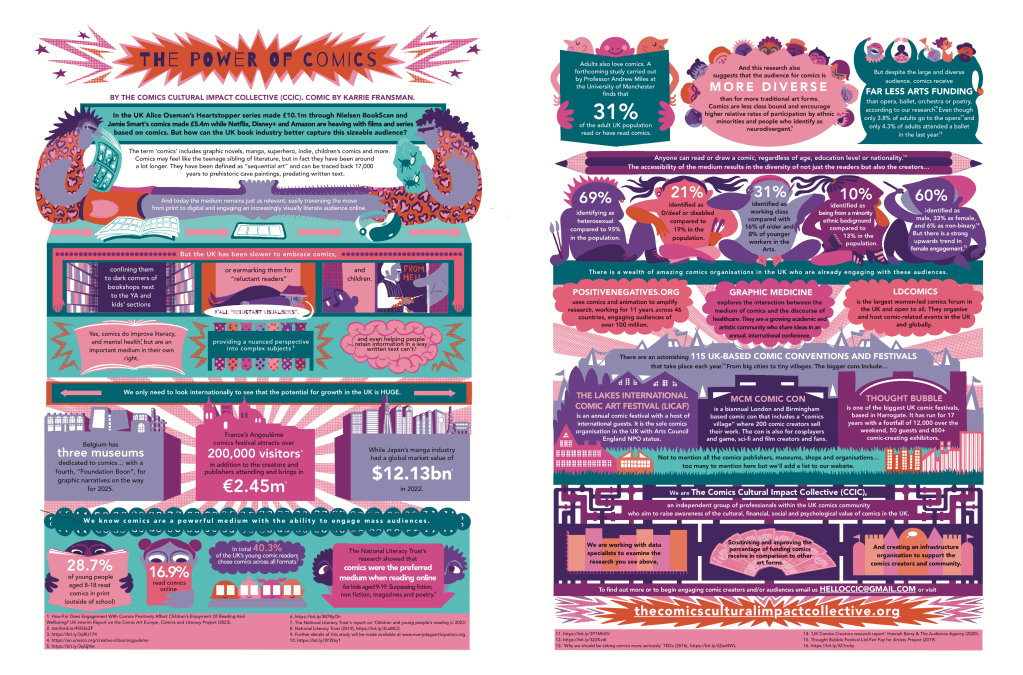
Some interesting facts and figures from Comics Cultural Impact Collective are above.
Want to help raise the profile of UK comics? Then join the round table on Tuesday 16th Jan from 7-8.30pm. Here’s the link here
I unfortunately can’t attend now but it looks interesting.
 ComicScene magazine
Leave a comment